Clepsydra
Moderniztion of an ancient Water Clock
PROJECT DESCRIPTION
Clepsydra, an ancient water clock rooted in classical physics, is revived in this project as a modern aesthetic object. It highlights time not just as a measurable unit but also as a bearer of aesthetic and cultural value.
The design's ability to scale down Clepsydra aligns with both classical physics principles and modern theorems. Using travertine material born from the interaction of water and time, the design preserves the geometric language of the past.
Individual Competition Project
2023
designed for a natural stone competition

The Brief
What can natural stone become?
This competition brief focuses on reinterpreting Turkish natural stone through original and innovative design proposals.
Participants are expected to reveal the material’s aesthetic, functional, and cultural value while creating projects that increase its added value in architecture and design.

Concept Inpiration
How can time be embodied in stone?
The relationship between stone and time emerged as a strong conceptual direction.
The way natural stone carries traces of duration, transformation, and permanence led the research toward historical interpretations of time.
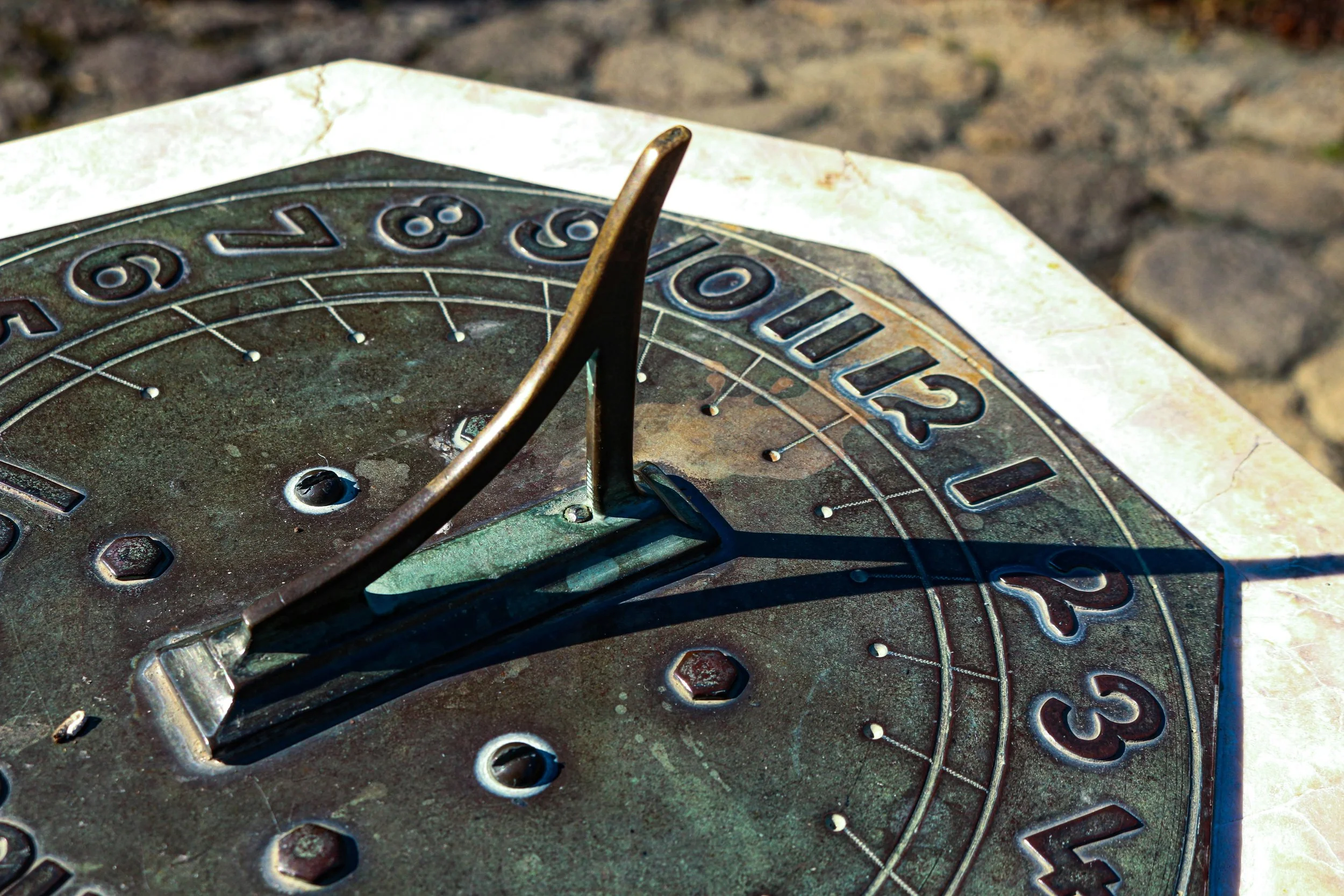
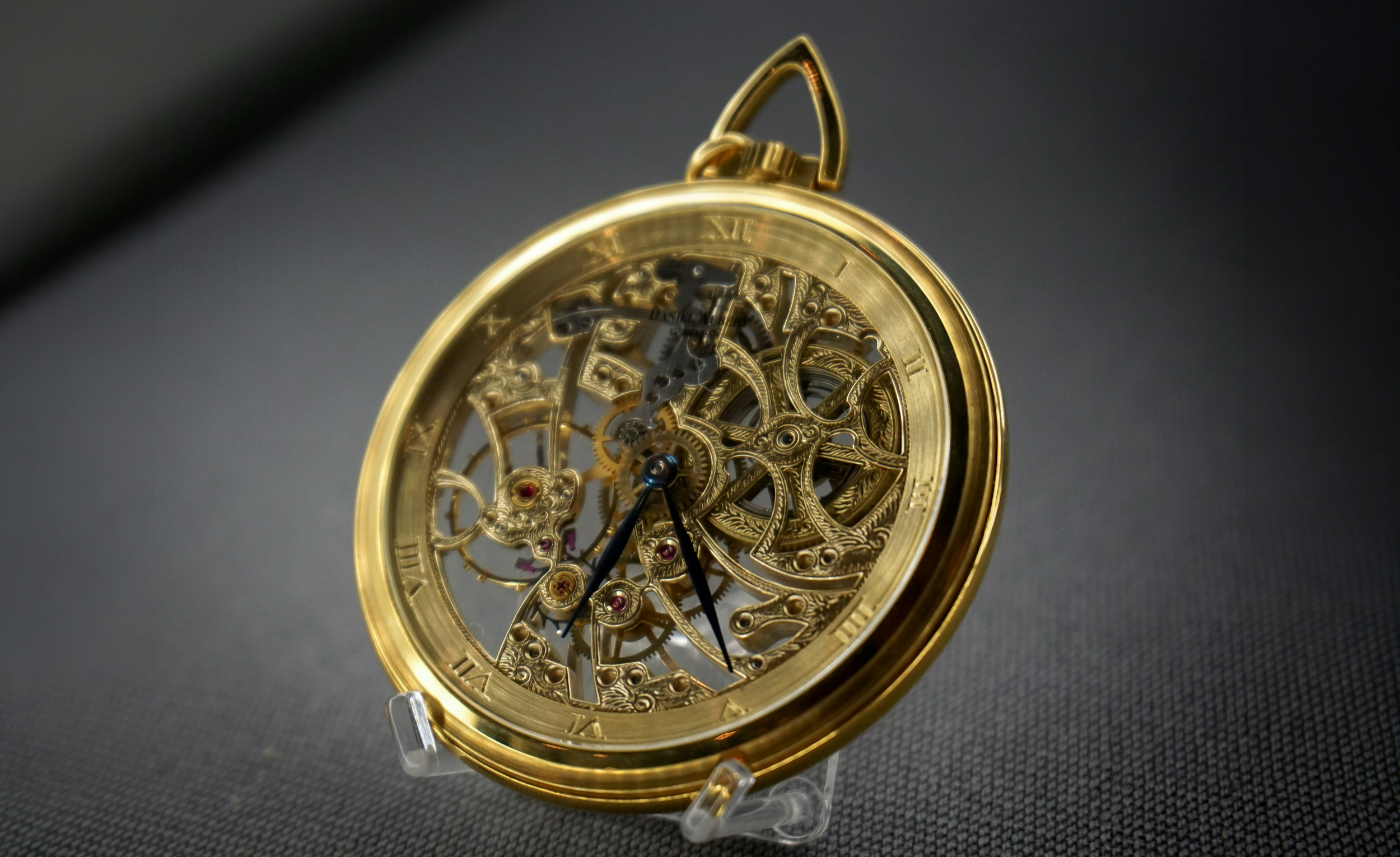
How has humanity attempted to measure time throughout history?
Sundial
Astrolabe
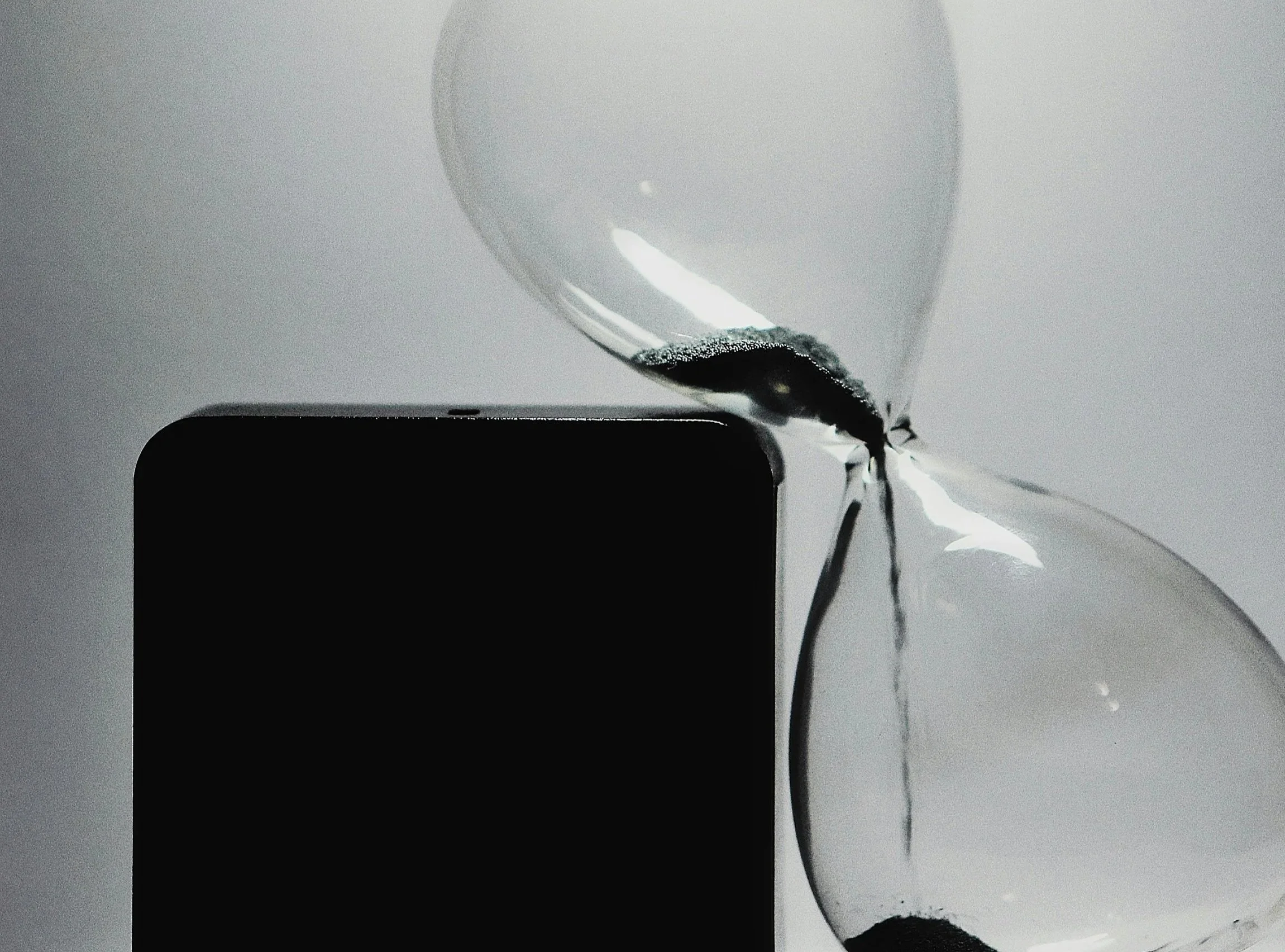
Hourglass
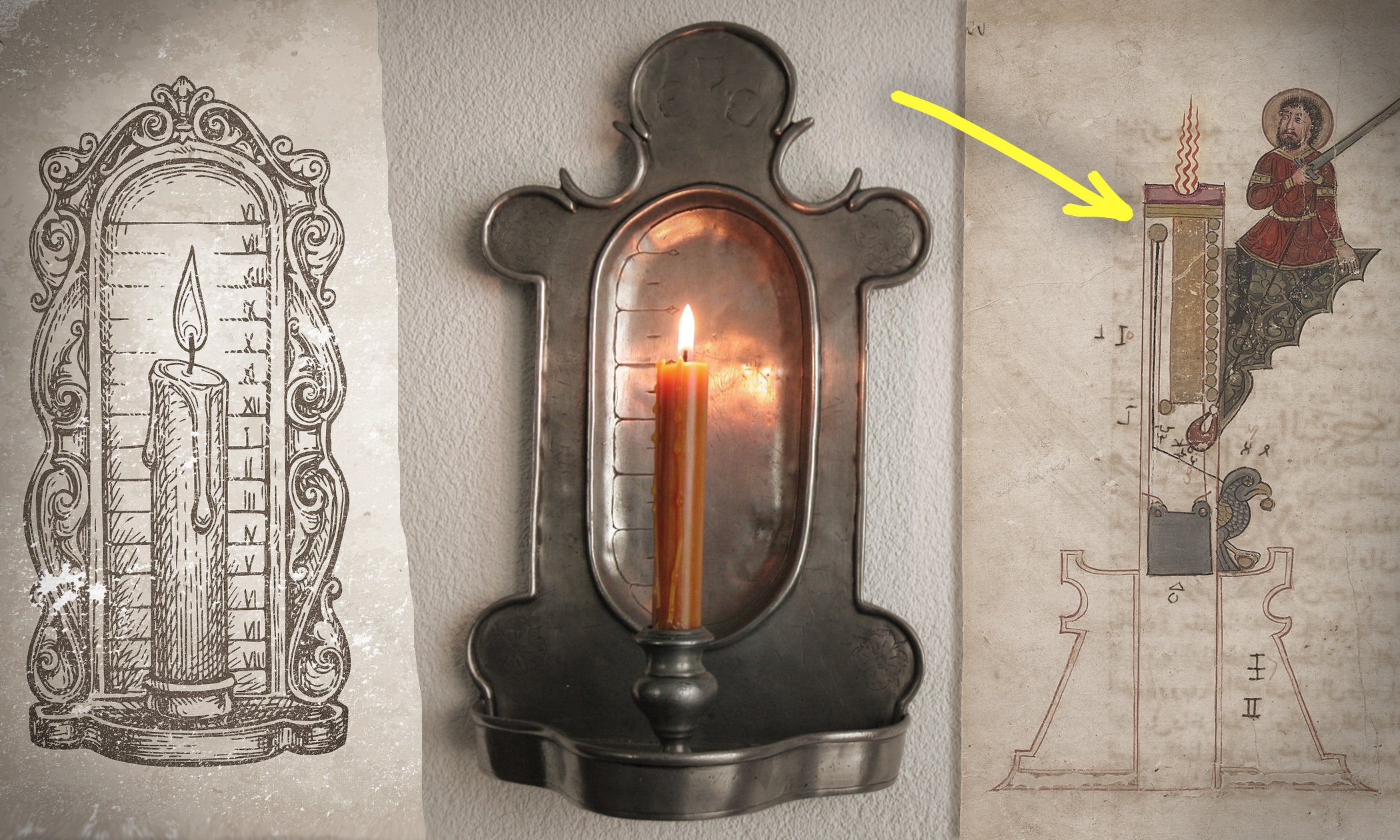
Candle Clock
Clepsydra
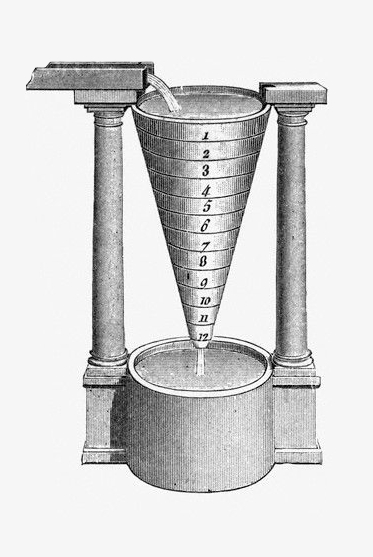
The clepsydra, or water clock, is one of the oldest known instruments used to measure time, operating through the controlled flow of water into or out of a vessel.
Unlike a sundial, it could function without sunlight, which made it especially valuable at night and in enclosed spaces.
What makes the clepsydra distinctive is the way it transforms a simple natural process into a precise system for tracking duration.
Its historical importance also lies in how different civilizations adapted it for ritual, law, irrigation, and later even early mechanical automation.
Product Development Phase
I first tried to understand how to work with travertine, the natural stone I selected for the project.
After that, I moved on to form and proportion development by beginning with a geometric analysis of the original clepsydra and using its underlying ratios to guide the design process.
From&Proportion Ideaiton
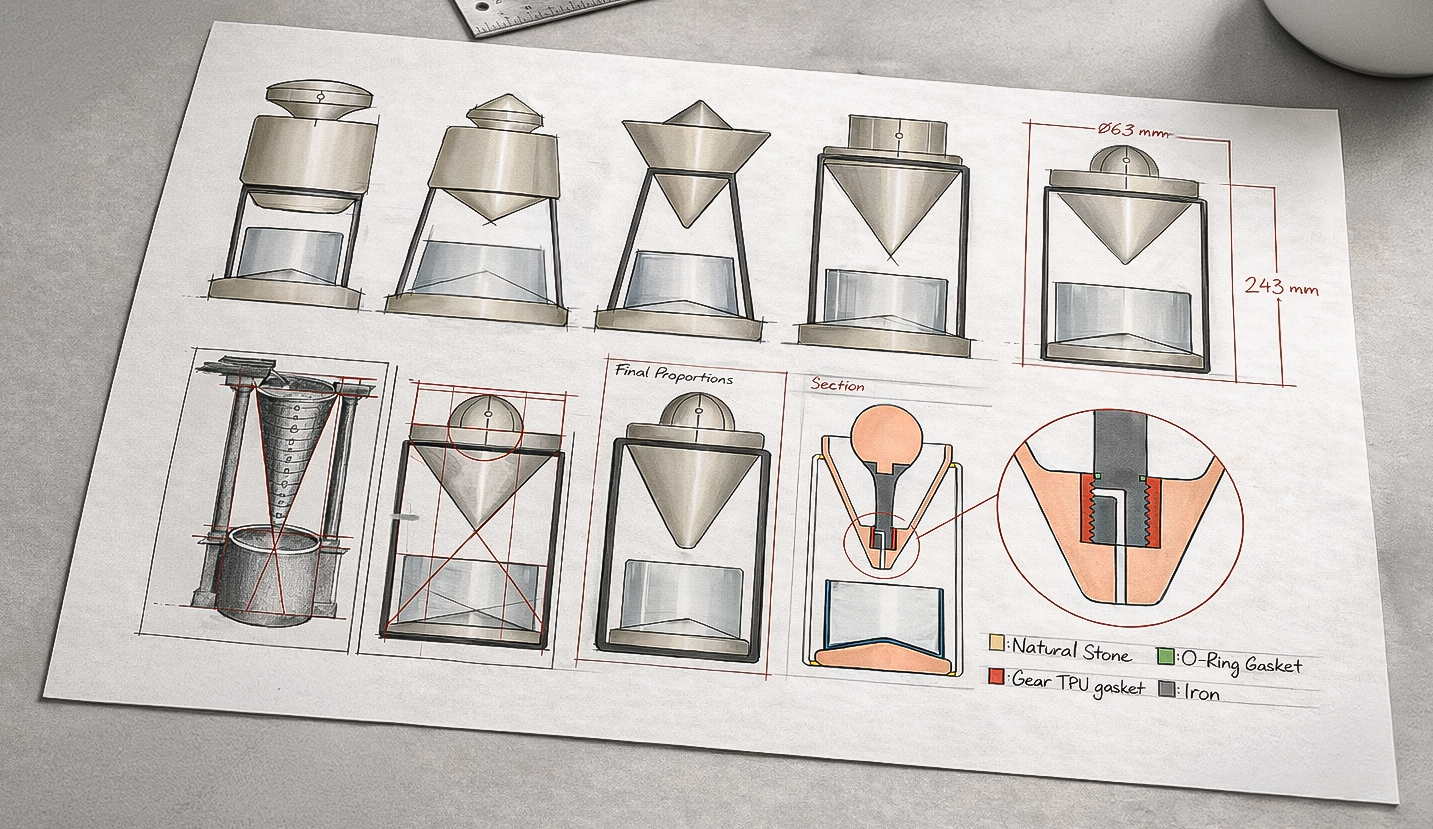
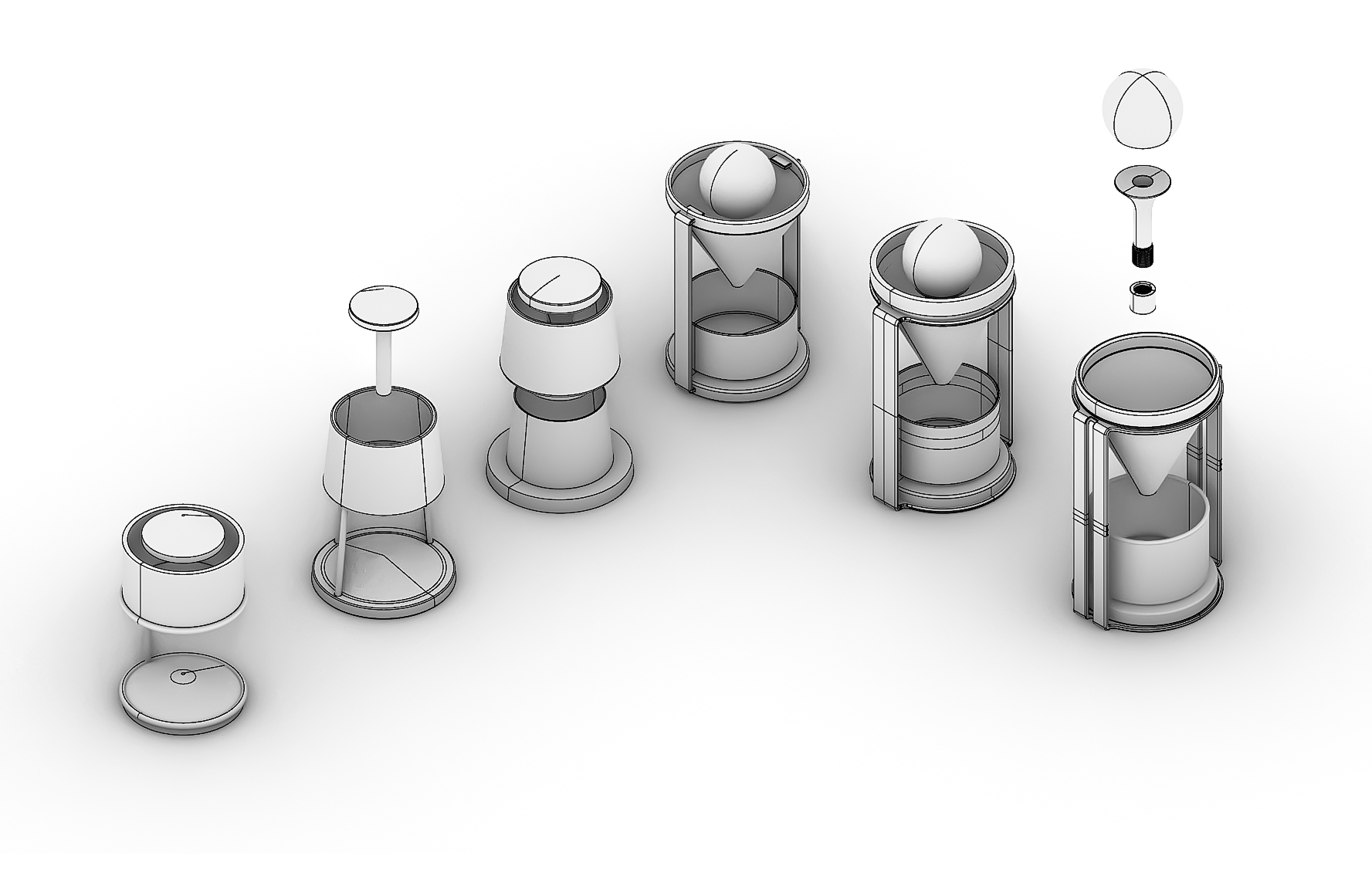
Product Overwiew
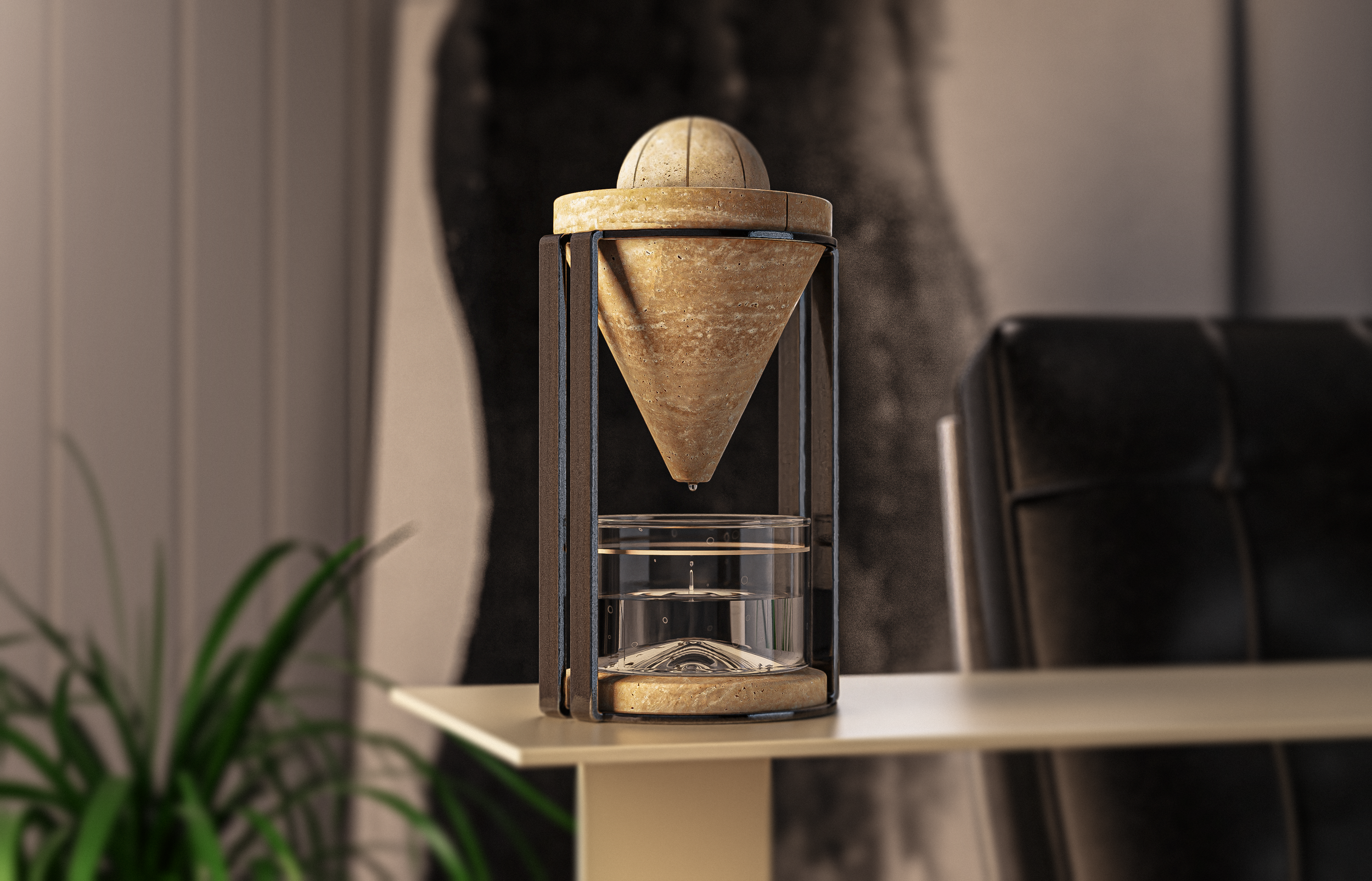
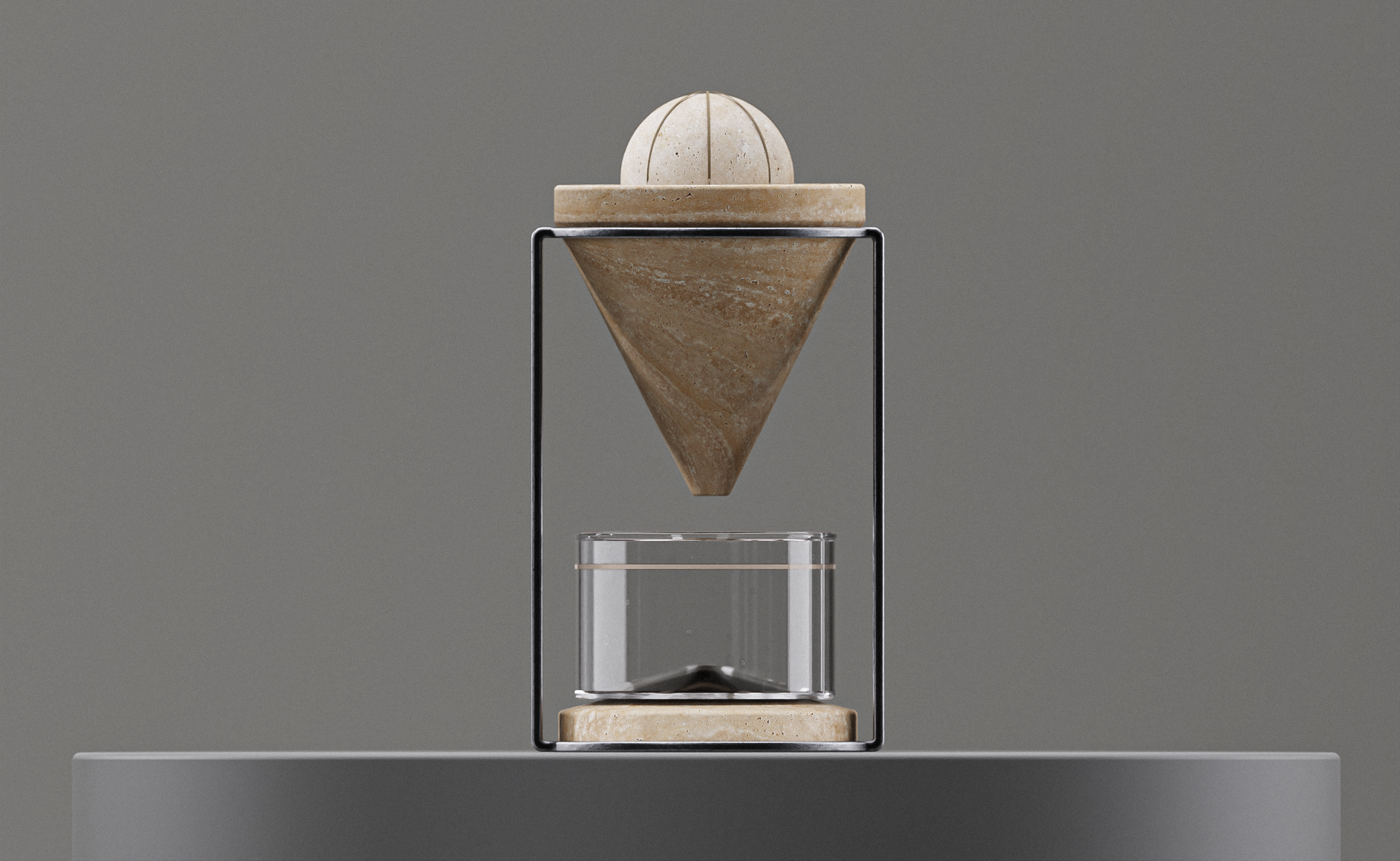
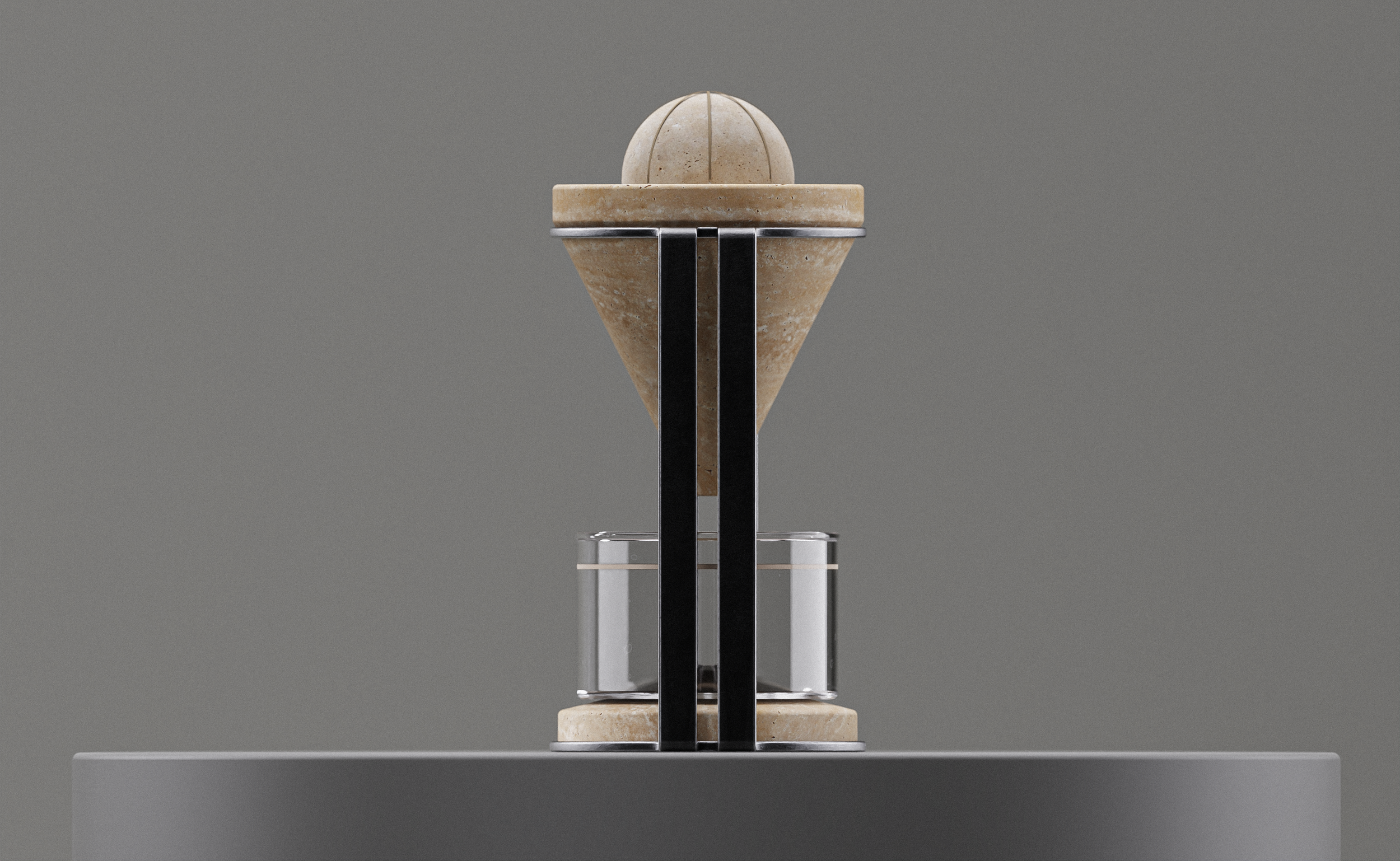
How to Use the Clepsydra ?
Step #1.
Add water to the line on the reservoir to ensure the product functions within the expected timeframes.
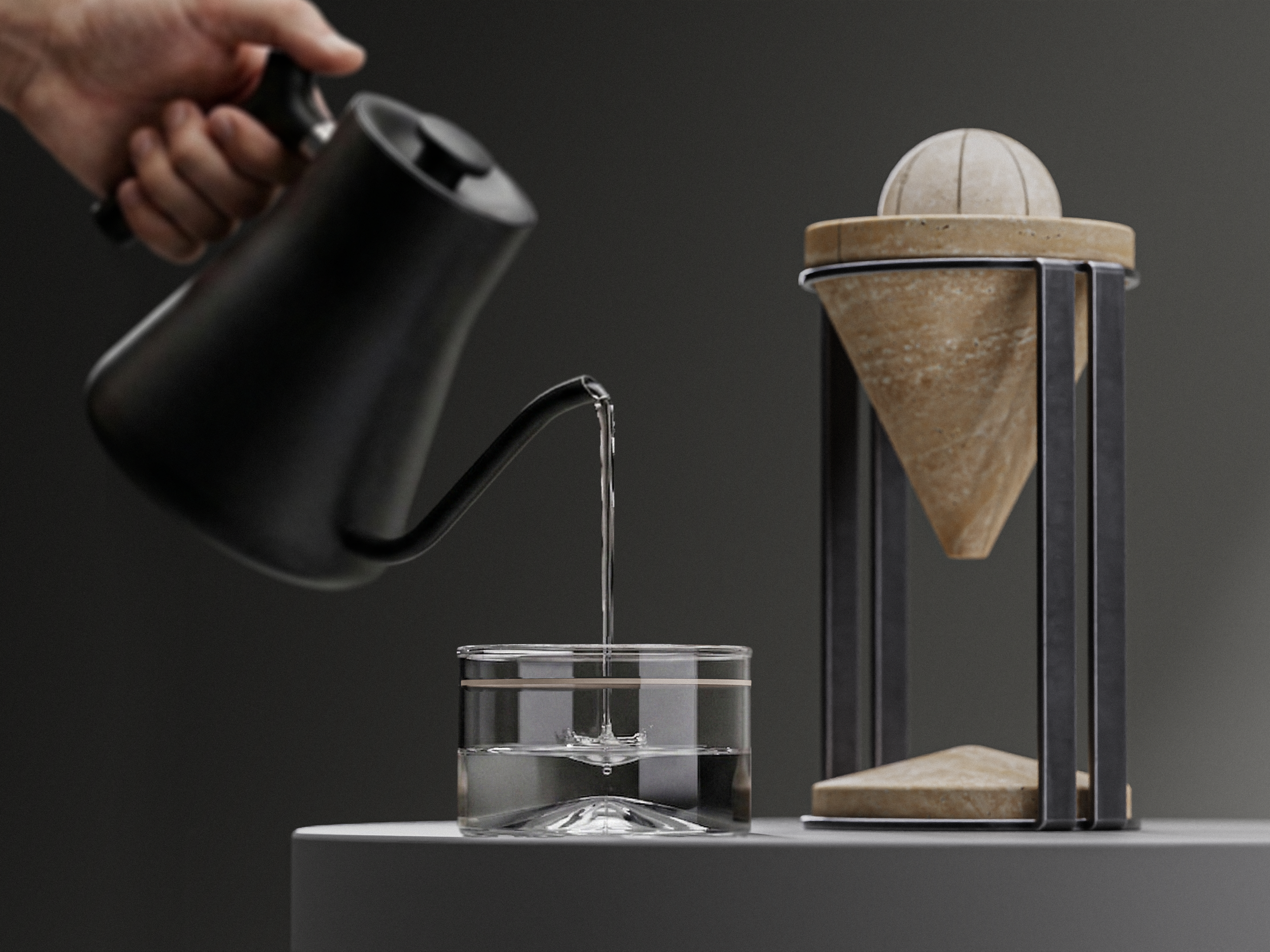
Step #2.
Water spills from the glass reservoir when the valve in the main body is closed (aligned with the notch at the zero point) and is then returned to the base.
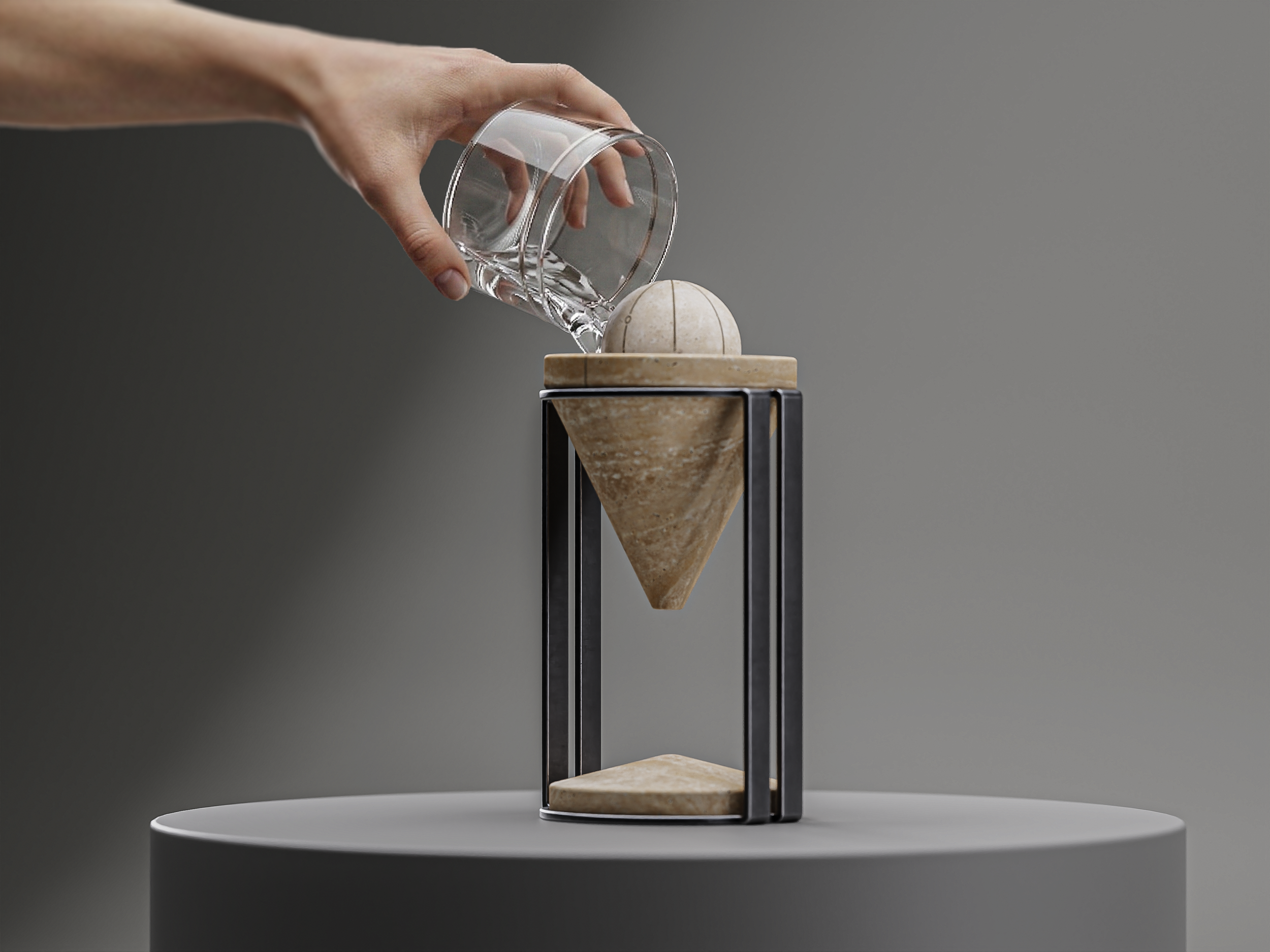
Step #3.
The product can drip water for up to 90 minutes.
Each notch on the knob speeds up the timer by about 10 minutes.
Turn the knob counterclockwise to set the desired time.
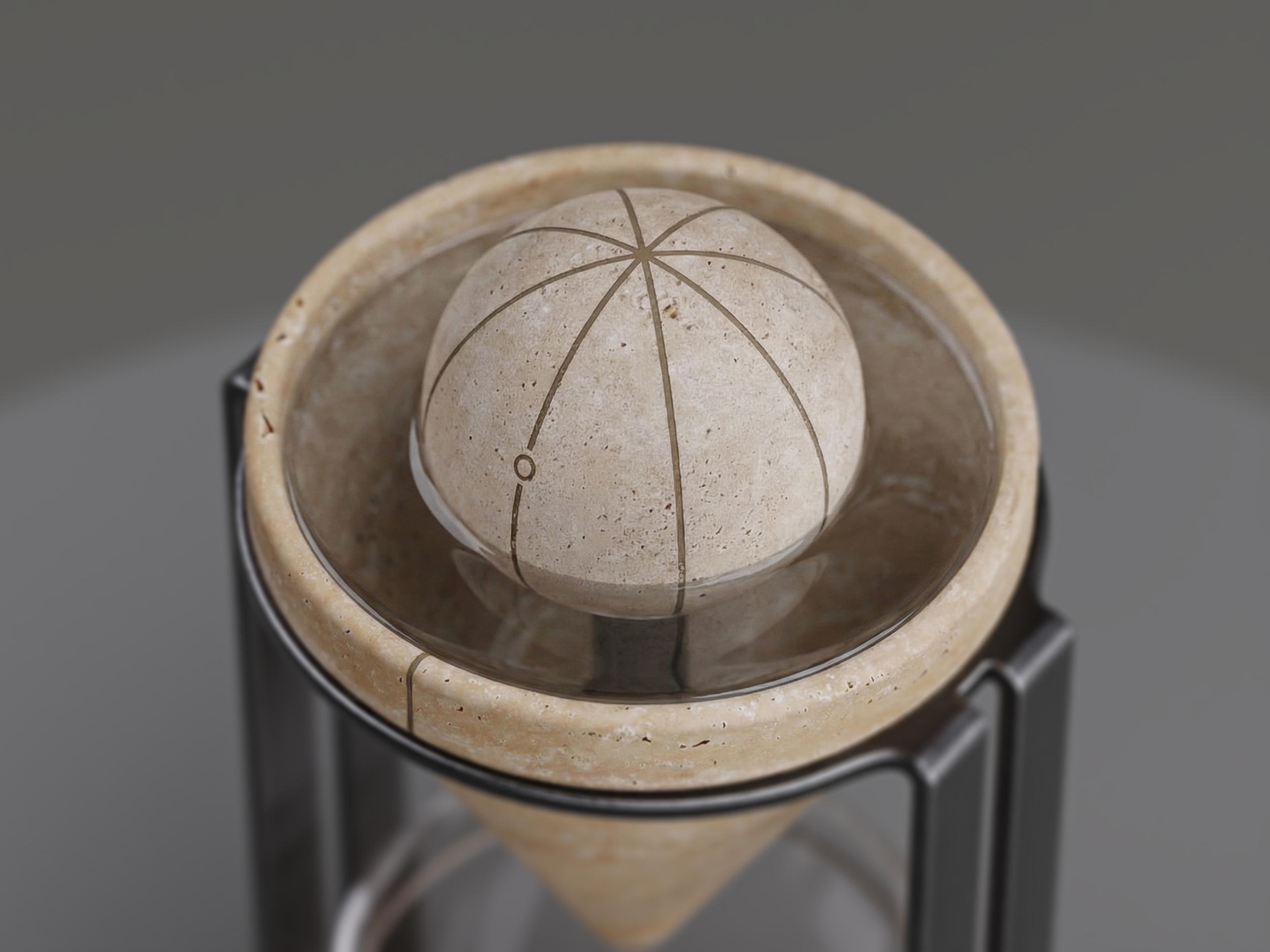
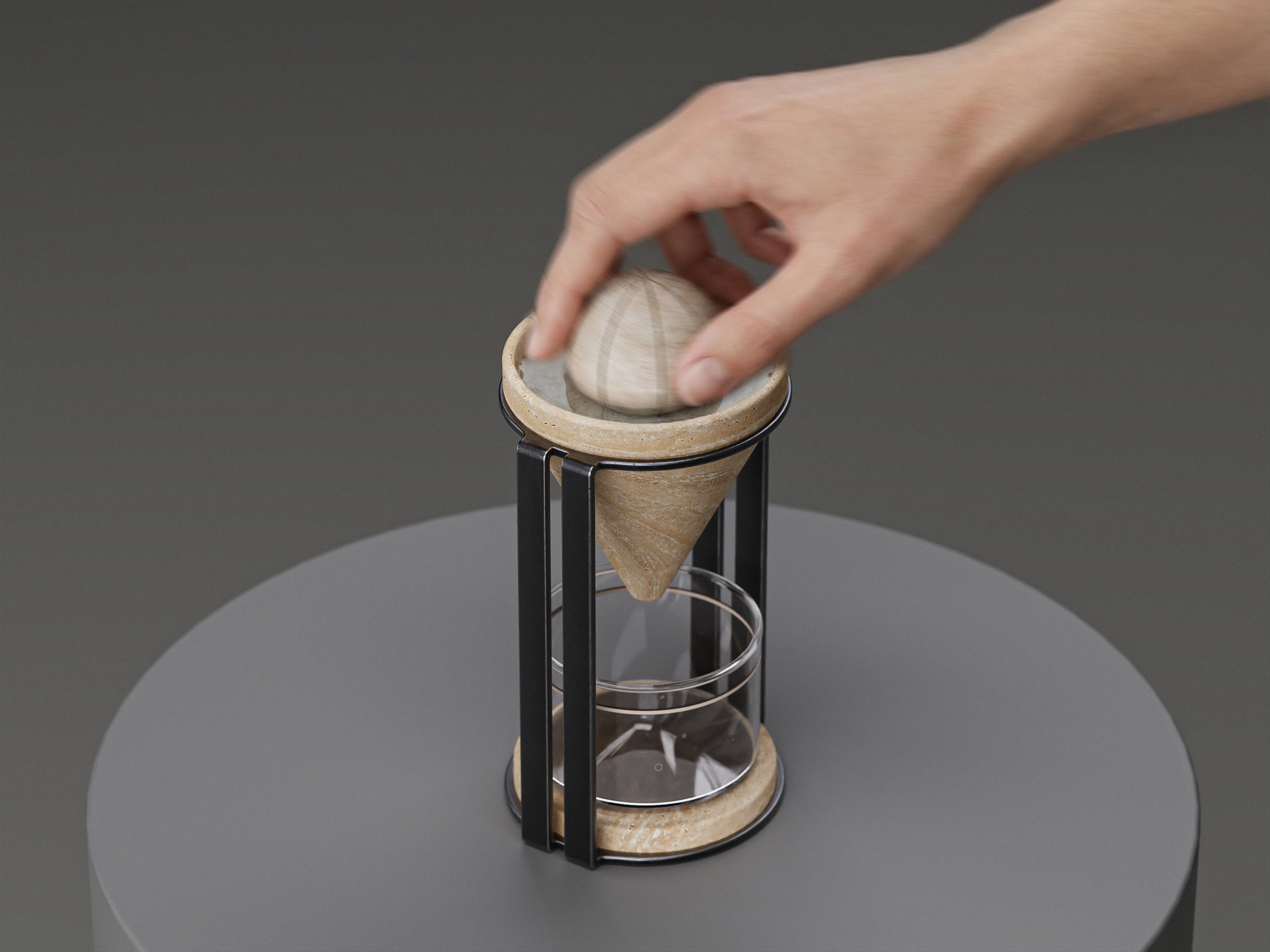

Step #4.
Just enjoy your solitude.
Working Principle & Exploded View
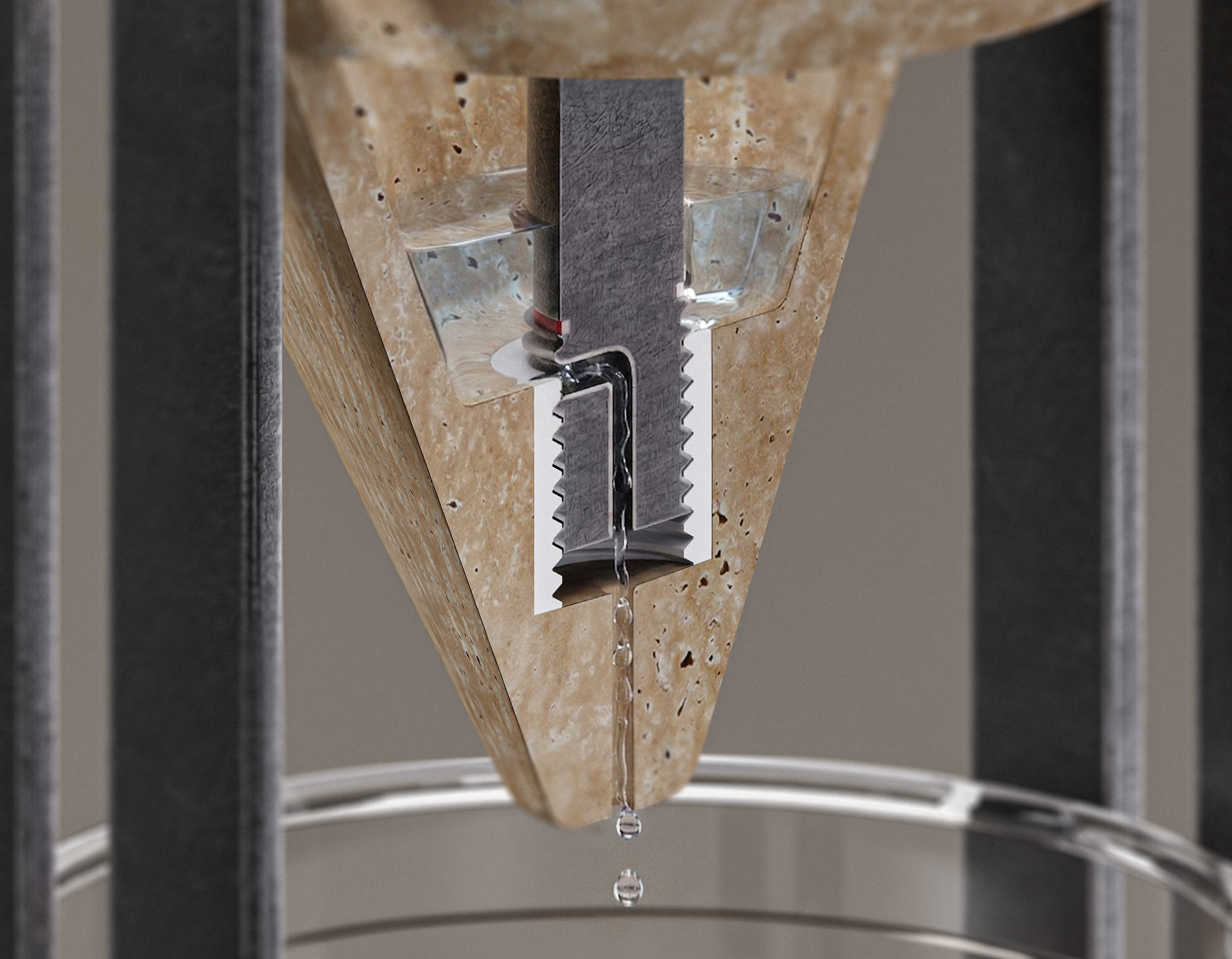
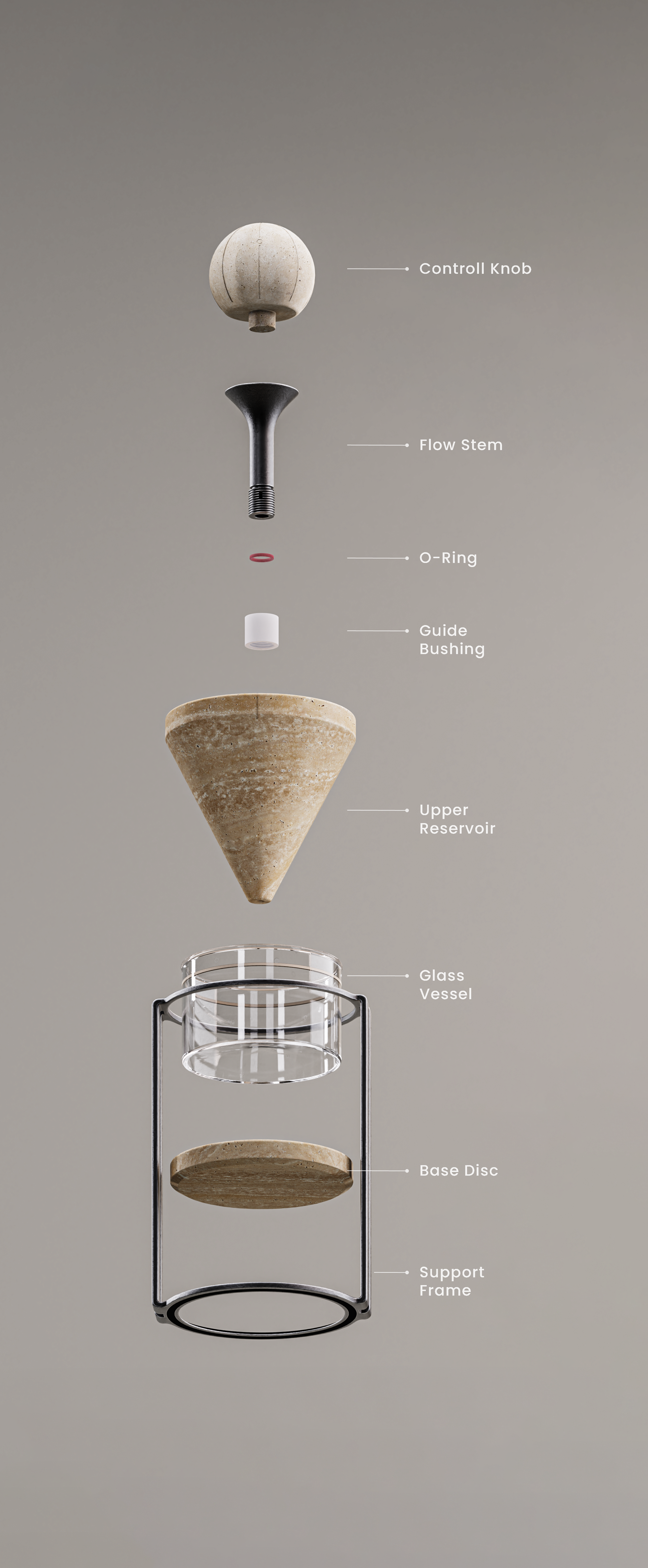
The travertine knob adjusts the drip rate by controlling water flow through a threaded mechanism and an L-shaped channel.
The design is sealed with a TPU gasket, and its operation is based on Bernoulli’s principle and the Young–Laplace equation.